
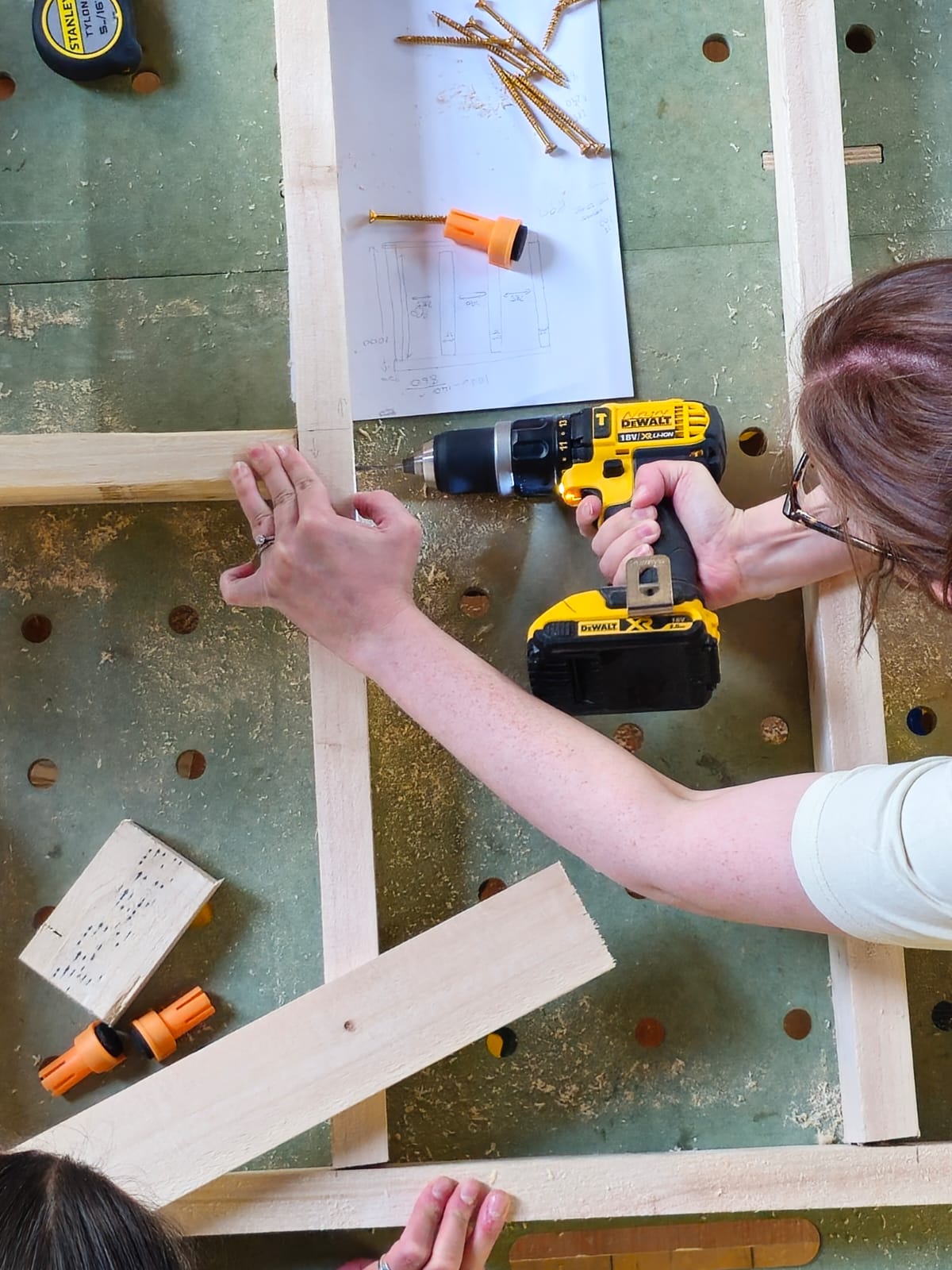

The first time you pick up a drill, it is rarely the drill itself that feels hardest. It is the noise, the uncertainty, and that small voice wondering if you are about to get it wrong. A good power tools training course changes that quickly. It replaces hesitation with know-how, and it does it in a way that feels practical, safe and encouraging rather than intimidating.
For many women, the biggest barrier is not ability. It is access. Plenty of people have never been shown how to use a combi drill, jigsaw or sander properly, and traditional trade spaces have not always felt welcoming. That matters, because learning to handle tools is about far more than one afternoon in a workshop. It is about being able to hang, fix, build and improve things in your own home with more confidence and less dependence on somebody else.
Why a power tools training course matters
There is a real difference between watching a few clips online and learning with tools in your hands. Videos can be useful, but they cannot correct your stance, show you why the drill bit is slipping, or explain why the material is splintering on the cut. In-person training gives you feedback in the moment, which is often what turns confusion into understanding.
It also helps you get comfortable with the physical feel of each tool. A drill behaves differently from an impact driver. A jigsaw needs guiding rather than forcing. A sander can remove more material than you expect if you are heavy-handed. These are simple lessons, but they are much easier to absorb when someone experienced is there to guide you through them.
Just as importantly, the right course helps remove the idea that tools are for somebody else. Practical skills are life skills. If you can measure accurately, choose the right bit, clamp safely and make a clean cut, you are no longer shut out of basic repairs and creative projects. That confidence often carries into other parts of life too.
What should a good power tools training course include?
At the heart of any worthwhile course is safe, supervised practice. Not endless theory, and not being talked at for hours. You need enough explanation to understand the tool, followed by time to use it properly.
A good course should start with the basics of tool identification and purpose. That means knowing what each tool is for, when to use it, and when not to. A combi drill, circular saw, jigsaw, mitre saw or orbital sander all have different strengths, and understanding those differences saves frustration as much as it improves safety.
From there, the training should cover setup. This is where a lot of beginner mistakes happen. Choosing the right blade or bit, checking the material, securing the workpiece, adjusting depth, and using the correct speed all affect the result. If a course skips over setup and jumps straight to using the tool, it leaves gaps that show up later.
Technique matters too. You should be shown how to hold the tool, how to position yourself, how much pressure to apply, and how to let the machine do the work. Beginners often think success comes from force. Usually it comes from control.
Then there is maintenance and care. You do not need to become a repair technician, but you should know how to store tools properly, keep them clean, check for wear, and spot signs that something is not right. That makes the tools last longer and helps you work more safely.
Safety should build confidence, not fear
People sometimes hear “tool safety” and expect a lecture designed to put them off. A better approach is to make safety part of confidence-building. When you understand risk clearly, the tool becomes less mysterious.
A strong course will cover personal protective equipment, safe clothing, dust awareness, cable management, battery handling and workspace setup. It should also explain the hazards linked to each tool in plain language. Not to frighten you, but to help you make good decisions.
This is especially important for beginners, because nerves can lead to rushed movements or second-guessing. When a workshop creates a calm, supportive atmosphere, people settle much faster. They ask more questions, practise more willingly and learn more thoroughly.
That supportive setting is not a “nice extra”. It is part of good instruction. If someone feels embarrassed for not knowing the difference between drill modes, or worried about asking a basic question, their learning slows down. When the environment is welcoming, they get further, faster.
Who benefits most from this kind of training?
A power tools training course is ideal for complete beginners, but it is not only for people starting from zero. It also suits women who have done bits of DIY before and want to stop relying on guesswork. Maybe you have assembled furniture, painted a room or put up shelves, but still avoid anything involving cutting timber or using powered equipment. This kind of training helps bridge that gap.
It is also a strong fit for creative learners who want to make rather than simply repair. Once you can use core tools safely, a lot of projects become possible – planters, stools, shelving, panelling, simple furniture and plenty of home improvements. The practical skill opens the door, but the real reward is the independence that follows.
For schools, youth groups, charities and team-building sessions, tool training can be powerful in a different way. It gives people a chance to try something tangible, useful and confidence-building together. That shared experience often matters just as much as the finished project.
The best learning happens through doing
The most effective workshops are built around action. You can explain a pilot hole in thirty seconds. Learning when and why to use one properly takes practice. The same applies to countersinking, straight cuts, sanding edges, changing accessories and controlling kickback.
That is why hands-on projects work so well. They give context to the skill. Instead of learning a random set of tool movements, you are using a drill to fix, a saw to shape, or a sander to finish something real. The result is much more memorable.
For many learners, the turning point comes when they finish a task they once thought was beyond them. It might be the first clean cut, the first hole drilled exactly where it should be, or the first time they realise they are no longer asking for help with every step. That moment matters. It proves capability in a very practical way.
Choosing the right course for you
Not every workshop will suit every learner, and that is worth saying. Some people want a broad introduction to several tools. Others want to focus on a specific outcome, such as carpentry basics or home improvement tasks. Neither is better. It depends on what you want to do afterwards.
If your goal is everyday confidence at home, look for training that covers commonly used tools and real household applications. If your goal is making furniture or tackling larger projects, you may need a course with more emphasis on cutting, joining and finishing timber.
The teaching style matters as much as the content. Small groups, clear demonstrations and time for questions make a huge difference. So does the atmosphere. For many women, learning in a female-focused space removes a lot of the pressure that can come with male-dominated DIY environments. It is easier to concentrate when you are not also trying to prove you belong there.
That is one reason practical workshops offered by businesses such as Building It Better NI resonate so strongly. The focus is not on showing off knowledge. It is on helping women and girls build genuine skill, confidence and self-reliance through hands-on experience.
What you take away goes beyond the workshop
A good course gives you more than one successful session. It changes how you approach problems. Instead of thinking, “I cannot do that,” you start thinking, “What tool would I need, and how would I do it safely?” That shift is powerful.
You may still choose to bring in a professional for bigger jobs, and that is sensible. A training course is not about pretending every task should become a DIY task. It is about knowing what you can do yourself, when to ask for help, and how to make those decisions with confidence rather than uncertainty.
That balance matters. Real empowerment is not about doing everything alone. It is about having enough knowledge and skill to choose, act and learn on your own terms.
If you have been waiting until you felt “handy enough” to start, start first. Confidence with tools does not arrive before experience. It grows because of it, one cut, one drill hole and one finished project at a time.