

That first squeeze of the trigger can feel louder than it should. If you are learning how to use a drill safely, the nerves are normal – and they do pass. A drill is one of the most useful tools you can own, but confidence comes much faster when you know exactly what to check before you start, how to hold it properly, and when to stop and reset.
For many women, the biggest barrier is not the tool itself. It is the feeling that power tools belong to somebody else – somebody more experienced, more technical, more sure of themselves. They do not. A drill is a practical home tool, and safe use is about good habits rather than brute strength.
How to use a drill safely before you start
Most drill problems begin before the bit touches the wall or timber. A rushed setup leads to slipping bits, damaged surfaces and shaken confidence. Giving yourself two extra minutes at the start makes the job easier and safer.
Begin by checking the drill itself. If you are using a cordless drill, make sure the battery is clipped in securely and has enough charge to finish the task. If it is corded, inspect the cable for any damage and keep it well away from where you will be drilling. The chuck – the part that grips the bit – should tighten properly, with no wobble.
Next, choose the right drill bit. This matters more than many beginners realise. A wood bit is designed differently from a masonry bit, and using the wrong one can cause skidding, overheating or poor results. If you are drilling into plasterboard over a wall cavity, the bit and fixing you need will be different again. Safe drilling is not just about handling the tool well. It is also about matching the tool to the material.
Your work area matters too. Make sure the surface is stable, dry and well lit. If you are drilling a loose piece of wood, clamp it rather than trying to hold it in place with one hand. If you are working on a wall, check what may be behind it. Pipes, cables and hidden services are not beginner-friendly surprises.
PPE is not overkill
A lot of people skip eye protection for quick jobs. That is exactly when debris ends up where it should not. Safety glasses are worth wearing whether you are drilling brick, timber or metal, because dust and small fragments travel fast.
Tie back long hair, avoid loose sleeves and remove jewellery that could catch. If you are drilling for a while or working with louder materials such as masonry, ear protection is sensible too. A dust mask can help if you are creating fine dust, especially indoors.
This is not about looking the part. It is about protecting yourself so you can focus on the task rather than flinching through it.
Getting your grip and stance right
A drill should feel controlled, not wrestled. Hold it with your dominant hand on the handle and your other hand supporting the body of the drill if the design allows. Many drills are light enough for one-handed use in theory, but beginners usually benefit from using both hands for better stability.
Stand with your feet planted and your balance steady. You do not need to lean your full body weight into the drill. In fact, too much force often makes the bit wander or jam. The aim is firm, even pressure while keeping the drill straight.
Try to keep your wrist in a neutral position rather than bent awkwardly. If the angle feels uncomfortable, adjust your body position instead of forcing the tool into place. Safe technique often looks calm and boring, which is exactly what you want.
How to drill safely into different materials
Different surfaces ask for different approaches, and this is where confidence really builds. Once you understand the behaviour of the material, the drill feels much more predictable.
Wood
Wood is usually the most beginner-friendly place to start. Mark your spot clearly and, if needed, make a small pilot hole first. Start drilling slowly so the bit bites cleanly instead of skating across the surface. Once it is established, you can increase speed.
If you are drilling right through a piece of timber, support the back with scrap wood to reduce splintering. Keep fingers away from the drilling line and never hold a small piece in your hand while drilling it.
Masonry and brick
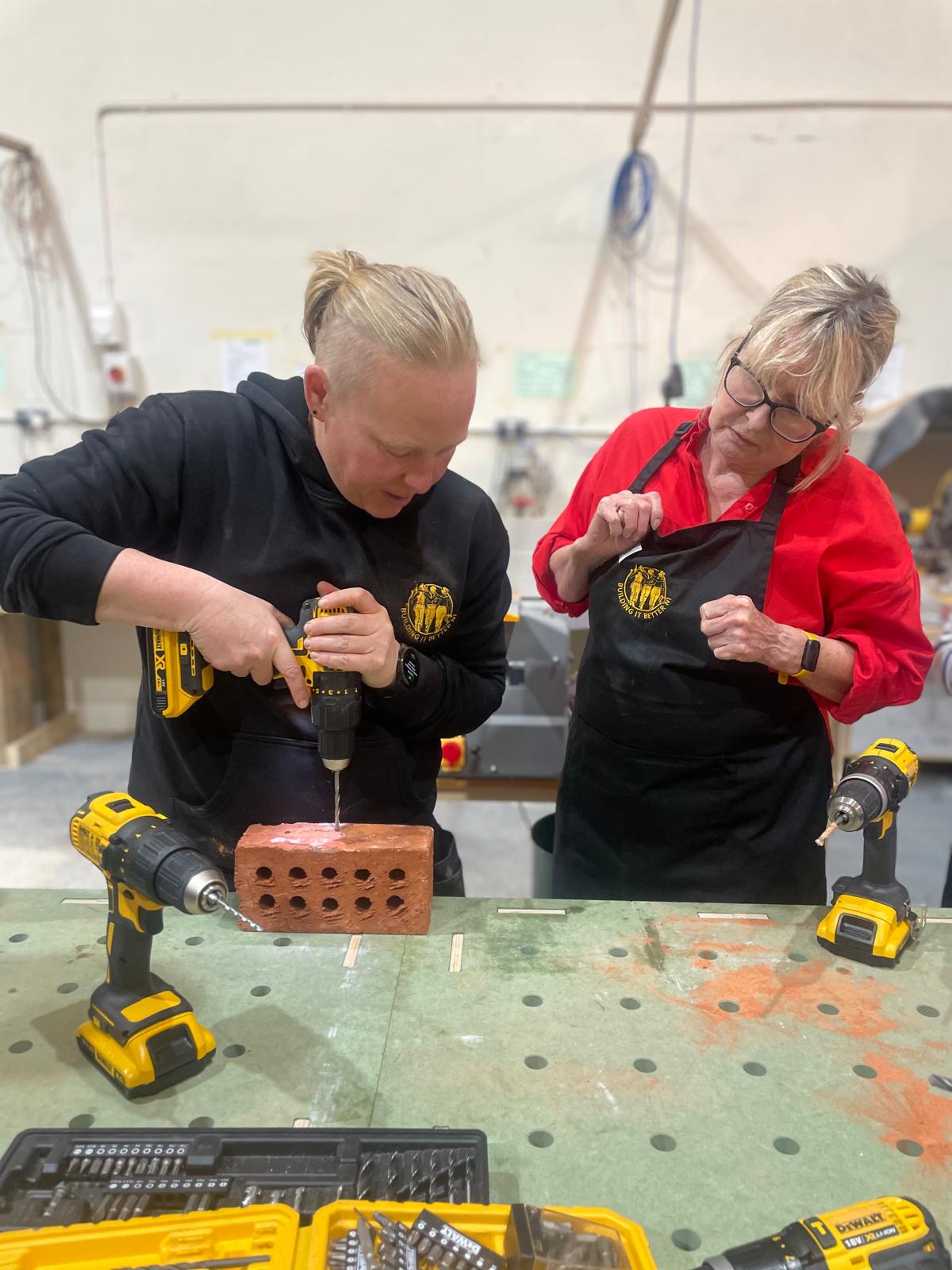
Brick, block and masonry need more patience. Use a masonry bit and, if your drill has a hammer setting, make sure it is only switched on when the material suits it. For tiles or delicate finishes on top of masonry, you may need to begin without hammer action to avoid cracking the surface.
Dust builds up quickly, so pause now and then to pull the bit out and clear debris. Let the tool do the work. If you force it, the bit can overheat or bind.
Metal
Metal drilling needs a steady pace and the correct bit. Start slowly so the bit does not slip off the mark. A centre punch can help create a small dent first, making the drill less likely to skid. Secure the metal properly before you begin, because spinning sheet metal is dangerous.
The bit and the drilled area can get hot, so avoid touching them straight away.
Common mistakes that make drilling less safe
The most common mistake is rushing the start. People often pull the trigger at full speed immediately, which makes the bit jump and leaves them feeling out of control. Starting slowly gives you accuracy and reduces slipping.
Another mistake is using blunt or poor-quality bits. If the bit is struggling, smoking or tearing the material, stop. More pressure is rarely the answer. A fresh, correct bit usually solves the problem faster than force ever will.
There is also the temptation to drill one-handed while holding the material with the other. That works until it suddenly does not. If something needs stabilising, clamp it.
Overreaching is another one. If the spot is too high, use a suitable step platform and make sure you are stable. Do not stretch with a spinning drill in your hand.
Knowing what is behind the wall
If you are drilling into a wall at home, one of the biggest safety points is hidden services. Electrical cables and water pipes may sit exactly where you want to put a shelf, hook or mirror.
Use a detector if you have one, especially in kitchens, bathrooms and around sockets or switches. Be cautious near radiators, boilers and plumbing runs. As a general rule, cables often run vertically or horizontally from sockets and switches, while pipes may run to and from sinks, toilets and radiators. That does not replace proper checking, but it should make you stop and think before drilling blindly.
If you are unsure, pause. Safe DIY includes knowing when more information is needed.
What to do if the drill bit jams
A jammed bit can be alarming, especially if the tool twists in your hand. The answer is not to fight it while the trigger is still pressed. Release the trigger immediately and wait for the drill to stop fully.
Check whether the bit is caught because of debris, wrong speed, too much pressure or the wrong bit for the material. Reverse the drill carefully if needed to back the bit out. If the bit is very hot, give it time to cool.
A jam is not a sign that you are bad at DIY. It usually means something in the setup needs adjusting.
Building confidence safely
If you are new to tools, start with simple practice rather than a high-stakes job. Drill a few test holes in scrap timber. Change bits. Practise tightening the chuck. Get used to the forward and reverse settings. Learn what the trigger feels like when you feather the speed gently.
Confidence grows from repetition, not from pretending you are already comfortable. A supportive learning environment helps too. At Building It Better NI, we see again and again that once women are shown the right technique and given space to practise, the fear around tools fades quickly.
Knowing how to use a drill safely is not about becoming fearless. It is about becoming familiar. The more often you work with care, the more natural that care becomes – and that is when a drill stops feeling intimidating and starts feeling like what it really is: a tool you can trust yourself to use.