
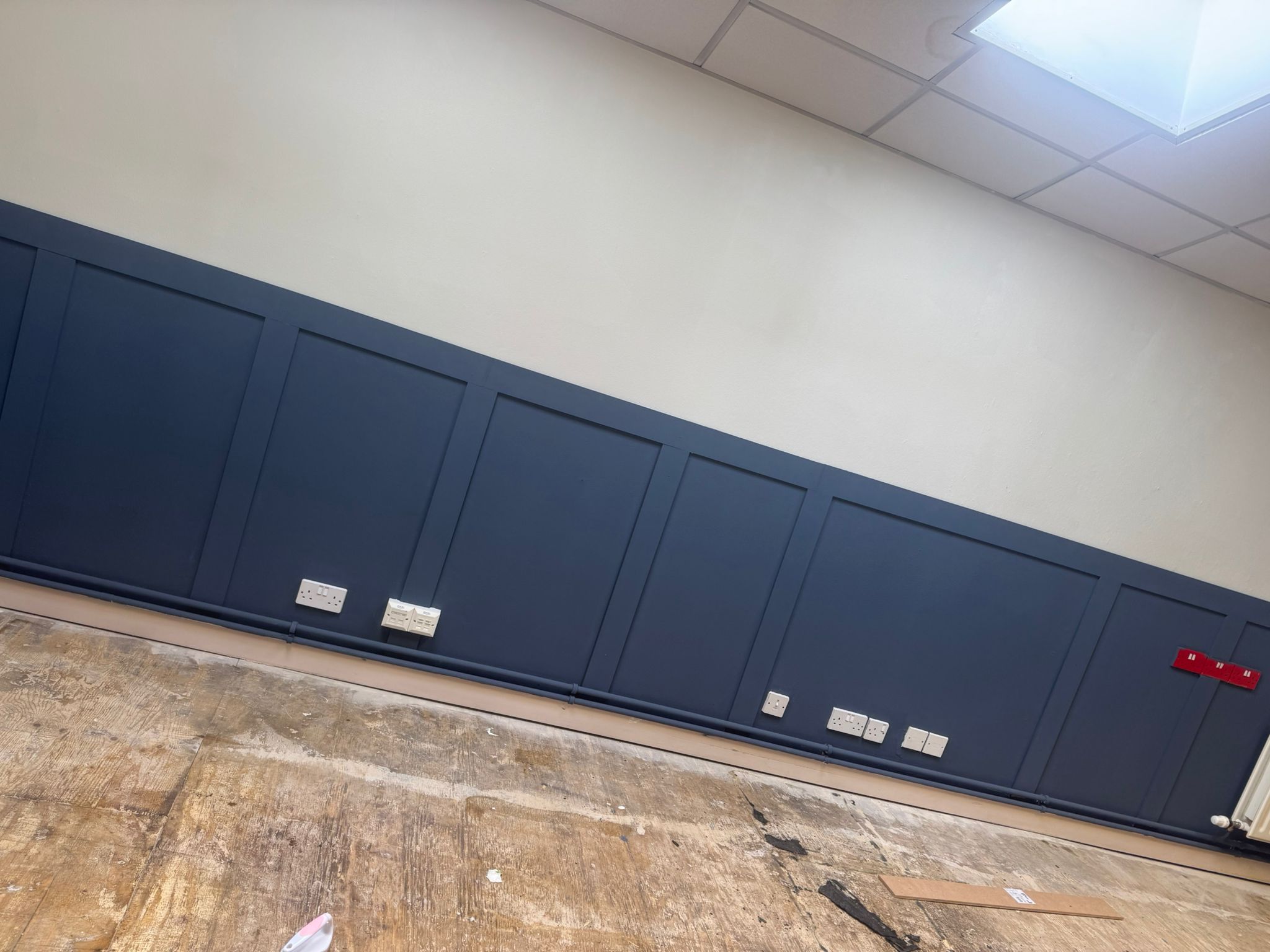

The first time you decide to panel a wall, it can feel bigger than it looks. A few neat battens on social media are one thing. Measuring properly, using tools safely and getting everything level on an actual wall is something else. That is exactly where a wood panelling workshop makes a difference – it turns a project that feels intimidating into one you can genuinely understand and do yourself.
For a lot of women, the barrier is not ability. It is confidence, access and the feeling that practical skills have somehow been kept behind a gate. A good workshop changes that quickly. Instead of guessing your way through a weekend project, you get hands-on guidance, proper tool time and a chance to learn by doing in a space where questions are welcome.
Why a wood panelling workshop is worth it
Wood panelling looks simple from the finished result, but there are plenty of small decisions that affect whether it looks polished or patchy. The spacing has to work with the shape of the wall. Measurements need to be consistent. The adhesive, fixings and finish all depend on the surface underneath and the style you want.
That is why this kind of workshop is so useful for beginners. You are not just being shown a trend. You are learning a process. Once you understand how to plan the layout, measure accurately, cut neatly and fit pieces with care, you can apply the same practical thinking to other jobs around the home as well.
There is also a real difference between watching a tutorial and holding the tools yourself. A video can show you what a mitre saw does. It cannot correct your stance, help you feel comfortable using it or explain what to do when your wall is not straight. In person, those little moments of uncertainty get dealt with there and then.
What happens in a wood panelling workshop
Most people arrive thinking the hardest part will be the cutting. Often, the real learning starts before that. Planning is what gives wood panelling its clean finish, so a well-run workshop usually begins with layout, measurements and understanding the wall you are working with.
You will usually learn how to assess the space, mark out a design and work out equal spacing so the final look feels balanced. That matters whether you want classic rectangular wall panelling, a half-wall feature or something more modern and minimal. Getting the design right on paper, or on the wall with markings, saves a huge amount of frustration later.
From there, the practical part begins. You may be introduced to key tools such as tape measures, spirit levels, saws, sanders, nail guns or adhesives, depending on the format of the class. For complete beginners, this is often the point where nerves start to ease. Tools are far less intimidating when someone explains them clearly, shows how they work and gives you time to try them properly.
You will also learn that fitting panelling is rarely about perfection in the abstract. It is about making good decisions in a real room. Walls can bow. Skirting boards can get in the way. Corners are not always square. A strong workshop teaches you how to adapt, not just how to follow ideal conditions.
The skills you actually leave with
The best workshops do more than help you complete one panelled section. They give you skills you can use again. Measuring with confidence is one of the biggest wins. So many DIY jobs go wrong because people rush this stage or doubt themselves halfway through. Once you understand how to check, mark and repeat measurements accurately, loads of home projects become more manageable.
You also build confidence with tools. That matters far beyond wood panelling. Learning how to handle a saw safely, clamp material in place, smooth edges and fix timber securely can open the door to shelving, furniture projects and general home improvements.
Then there is the problem-solving side. In a workshop, you learn how to pause, assess and adjust instead of assuming you have failed if something is slightly off. That shift in mindset is powerful. DIY becomes less about getting everything perfect first time and more about building the confidence to work through challenges.
Who benefits most from this kind of class
A wood panelling workshop is ideal for complete beginners, but it is not only for beginners. It can suit anyone who wants to stop relying on guesswork and start learning practical skills in a more solid way.
If you have saved lots of home improvement ideas but never started because the tools felt daunting, this kind of class is a strong first step. If you have done bits of decorating before but avoided anything involving cutting or fixing timber, it helps bridge that gap. It can also be a great fit for friends, community groups and workplace teams who want to learn something useful while doing something creative together.
For women especially, the atmosphere matters. Many people have been made to feel that trade skills are not for them, or that they should already know things they were never taught. A supportive workshop removes that pressure. You do not need prior experience. You do not need to pretend you understand every tool name. You just need a willingness to have a go.
What to look for in a good workshop
Not every class will teach in the same way, so it is worth knowing what makes a session genuinely useful. Clear instruction matters, but so does enough hands-on time. If a workshop is all demonstration and no doing, it is harder to build real confidence.
Look for a class that is beginner-friendly without being patronising. The teaching should be practical, straightforward and grounded in real results. You want to come away understanding why you are doing each step, not just copying it.
It also helps if the environment feels welcoming. People learn better when they feel comfortable asking basic questions and making mistakes. That is especially true with tools. A supportive setting gives you room to build confidence at your own pace.
For many women across Northern Ireland, that is exactly why businesses such as Building It Better NI stand out. The focus is not on gatekeeping or jargon. It is on helping women and girls feel capable, informed and ready to take practical skills back into their own homes and lives.
Common worries before your first class
One of the biggest worries is being the least experienced person in the room. In reality, most attendees are there to learn from scratch or to build confidence in areas they have avoided before. Workshops like this are designed for that starting point.
Another common concern is tools. People often think they need strength, prior knowledge or a very steady hand from the outset. You do not. Good technique, safe setup and proper guidance matter far more than trying to look experienced.
There is also the fear of getting it wrong. But a workshop is exactly where wrong turns become useful. If a measurement is off or a cut needs adjusting, that becomes part of the learning. It is far better to make those discoveries with support around you than alone halfway through a home project.
Why this matters beyond the wall itself
Wood panelling can transform a room, but the bigger change is often personal. There is something powerful about stepping back from a wall you have measured, cut and fitted yourself. It changes how you see the task, and often how you see your own capability.
That confidence does not stay neatly attached to one feature wall. It tends to carry over. The person who learns to panel a wall often becomes the person who feels ready to put up shelves, repair simple fittings, use power tools or tackle that project they have been putting off for months.
Practical skills give you options. They can save money, yes, but they also give you more control over your space and more trust in your own judgement. That matters whether you own your home, rent and want to feel more self-reliant, or simply want to stop sitting on ideas because you assume someone else would do them better.
If wood panelling has been sitting on your list for ages, a workshop can be the thing that moves it from maybe someday to actually done. Not because someone does it for you, but because you learn that you are fully capable of doing more than you thought.